
How to Stop Dog Barking at the Door:
The doorbell rings, someone knocks, or a delivery arrives, and your dog explodes into barking, jumping, and racing to the door. It’s one of the most common barking problems in American homes. The good news is that it’s very trainable. If you’re wondering how to stop dog barking at the door, the key is to teach your dog a calm alternative behavior and make the doorbell predict good things.
Here are eight easy, positive steps for calm, polite greetings.
Why Do Dogs Bark at the Door?
- Alerting and protecting: Dogs naturally warn their family about visitors.
- Excitement: Guests mean attention and fun.
- Fear or uncertainty: Some dogs are nervous about strangers.
- Learned behavior: Barking seems to “work,” since the person eventually leaves (like delivery drivers) or you rush to the door.
8 Steps to Stop Barking at the Door
Step 1: Pick a Spot and Teach “Go to Your Mat”
Choose a mat or dog bed a few feet away from the door, where your dog can see but not crowd it.
1. Lure your dog onto the mat with a treat.
2. Reward it for standing, then sitting or lying on the mat.
3. Add a cue like “place” or “mat.”
4. Practice until your dog goes to the mat on cue, from different parts of the room.
Step 2: Teach “Stay” on the Mat
Build duration slowly. Reward your dog for staying on the mat for a few seconds, then longer. Add small distractions, like you walking toward the door.
Step 3: Desensitize the Doorbell Sound
The doorbell often triggers barking before anyone even enters.
1. Play a recorded doorbell sound at low volume (or tap the door softly).
2. Immediately give your dog a treat.
3. Repeat many times until your dog looks at you expectantly when it hears the sound.
4. Gradually increase the volume.
Your dog learns that the doorbell predicts treats, not strangers.
Step 4: Combine the Doorbell With the Mat
Now, ring the bell (or play the sound) and cue “mat.” Reward your dog heavily for going to its mat. Practice this many times with no real visitors.
Step 5: Practice With Helpers
Ask a friend or family member to ring the bell or knock:
1. Cue your dog to go to its mat.
2. Reward calm behavior.
3. Open the door slowly, only if your dog stays calm.
4. If your dog leaves the mat, close the door, reset, and try again.
Step 6: Reward Quiet Moments
When your dog stops barking, even for a second, reward it. Gradually wait for longer periods of quiet before rewarding.
Step 7: Manage the Environment
While training, prevent your dog from practicing the barking habit:
- Use a baby gate to keep your dog away from the door.
- Block views of the front yard with window film or curtains.
- Put a “Please don’t knock or ring” sign on your door for deliveries during training.
- Use white noise to muffle outside sounds.
Step 8: Keep Greetings Calm
When guests arrive:
- Ask them to ignore your dog until it’s calm.
- Let your dog approach when it’s relaxed.
- Reward calm sniffing and polite sitting.
What Not to Do
- Don’t yell. It can sound like you’re joining in and increase excitement.
- Don’t punish your dog. It can create fear of visitors.
- Don’t let your dog rush the door, which can be unsafe for both your dog and guests.
- Don’t expect instant results. This habit takes practice.
How Long Does It Take?
Many dogs improve within 2–4 weeks of consistent practice. Dogs with long-standing habits or fear of strangers may need more time. Short, daily sessions work best.
If Your Dog Is Afraid of Visitors
If your dog barks at the door because it’s scared:
- Give it a safe place away from the door, like a crate or a quiet room.
- Let guests toss treats without approaching.
- Never force interactions.
- Consider a certified trainer or veterinary behaviorist.
Related Barking Guides
Door barking is just one type of barking. Our main guide on how to stop dog barking covers all the basics. You may also find how to stop dog barking at other dogs and how to stop dog barking at night helpful. If you live in an apartment where hallway noise is a trigger, see the best dog breeds for apartments.
For more positive training help, visit the American Kennel Club’s training resources and the ASPCA’s pet care pages.
Practice Plan for Week One
- Days 1–2: Teach “mat” and short stays.
- Days 3–4: Pair a quiet doorbell sound with treats.
- Days 5–6: Doorbell sound, then “mat,” then reward.
- Day 7: Practice with a helper at the door.
Keep each session 5–10 minutes and end on a positive note.
Doorbell Training Tools That Help
- A comfortable mat or bed near the entryway
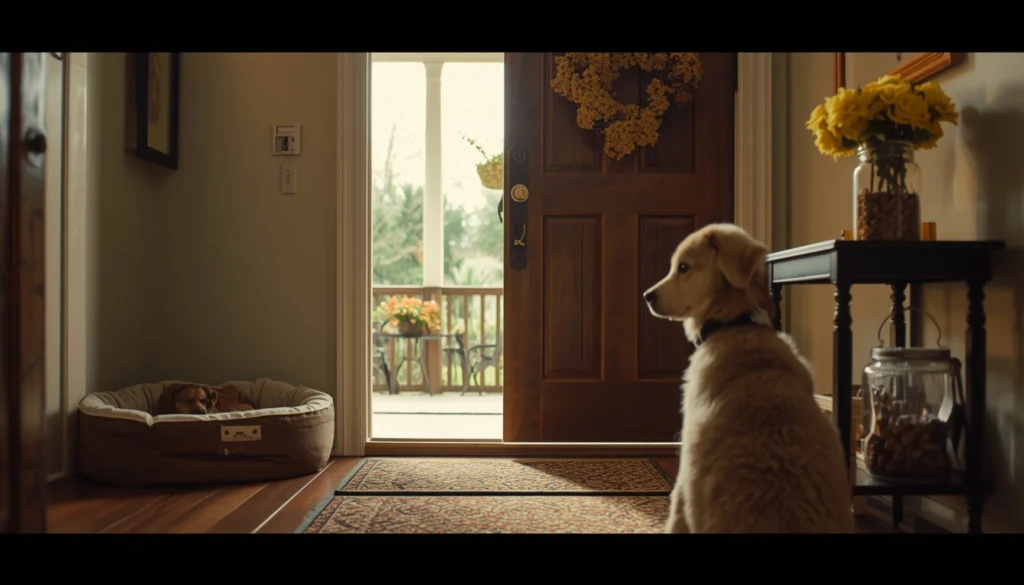
- A treat jar by the door for quick rewards
- A baby gate to prevent door rushing
- A recorded doorbell sound on your phone for practice
- A leash clipped on during early guest practice
The Bottom Line
To stop your dog barking at the door, teach a reliable “go to your mat” cue, pair the doorbell with treats, practice with helpers, and reward calm, quiet behavior. Manage the environment during training with baby gates and blocked views, stay calm, and avoid punishment. With consistency, your dog can learn to greet guests politely instead of barking.
Frequently Asked Questions
Why does my dog go crazy when the doorbell rings?
The doorbell predicts visitors, excitement, or strangers, and many dogs bark to alert or protect.
How do I stop my dog barking at delivery drivers?
Block views, pair delivery sounds with treats, and practice the mat cue. Drivers leaving can reinforce barking, so training is key.
Should I let my dog greet guests at the door?
Only when your dog is calm. Otherwise, use a mat, crate, or baby gate until it settles.
Can I change my doorbell sound to help?
Yes. Some owners change the doorbell tone during training to start with a fresh, positive association.
What if my dog barks at every knock on TV?
Practice desensitization with recorded knocks and doorbells at low volume, pairing them with treats.
Is barking at the door a sign of aggression?
Not usually. Most door barking is alerting or excitement. Seek help if your dog lunges, growls, or bites.
Can a trainer help with door barking?
Yes. A certified positive-reinforcement trainer can build a plan for your home, especially if your dog is anxious or very reactive.




1 pet parent chimed in