

Syrian Hamster Cage:
Syrian hamsters, also called golden or teddy bear hamsters, are the largest and most popular pet hamster species. They’re also very active. In the wild, hamsters can travel long distances each night. That’s why choosing the right Syrian hamster cage is one of the most important decisions you’ll make for your pet’s health and happiness.
This guide explains how big a Syrian hamster cage should be, the best types of cages, and how to set it up properly.
How Big Should a Syrian Hamster Cage Be?
Many cages sold as “hamster cages” are far too small. Modern hamster welfare guidelines recommend much more space than older standards.
- Commonly recommended minimum: about 775 square inches (5,000 square centimeters) of continuous floor space, roughly 40 × 20 inches (100 × 50 cm)
- Better: 1,000 square inches or more
Continuous floor space means one open level, not the total of small platforms or shelves added together. Hamsters benefit from a large, open area to run, dig, and explore.
Why Size Matters
Hamsters in small cages often show stress behaviors such as:
- Bar chewing and bar climbing
- Pacing or repetitive movements
- Constant escape attempts
- Aggression or biting
A larger enclosure gives your hamster room to behave naturally and reduces these problems.
Best Types of Syrian Hamster Cages
Large Glass Tanks (Aquariums)
- Pros: deep bedding is easy to contain, no bars to chew, and they look great
- Cons: heavy and expensive, and need a mesh lid for airflow
- Size tip: a 75-gallon tank (48 × 18 inches) offers about 864 square inches
Bin Cages (DIY)
- Pros: affordable, customizable, and deep enough for lots of bedding
- Cons: can be chewed, need mesh ventilation panels, and are less attractive
- Tip: choose the largest clear storage bin you can find and add secure mesh windows
Large Wire Cages
- Pros: great ventilation and easy to find
- Cons: many have shallow bases that don’t hold deep bedding, and bars can encourage chewing
- Tip: for Syrians, bar spacing should be no more than about ½ inch (1.2 cm)
Wooden or Modular Enclosures
- Pros: attractive, spacious, and deep bedding friendly
- Cons: wood can absorb urine, so choose sealed or coated bases
Cages to Avoid
- Small multi-level cages with tiny floors
- Cages built around plastic tubes, which are often too narrow for Syrians
- Hamster balls used as “exercise,” which can stress hamsters and limit their senses
Large Hamster Cage Features to Look For
- A deep base to hold 8–10 inches of bedding
- Secure closures, since hamsters are escape artists
- Good ventilation
- Easy access for cleaning and feeding
- Chew-resistant materials
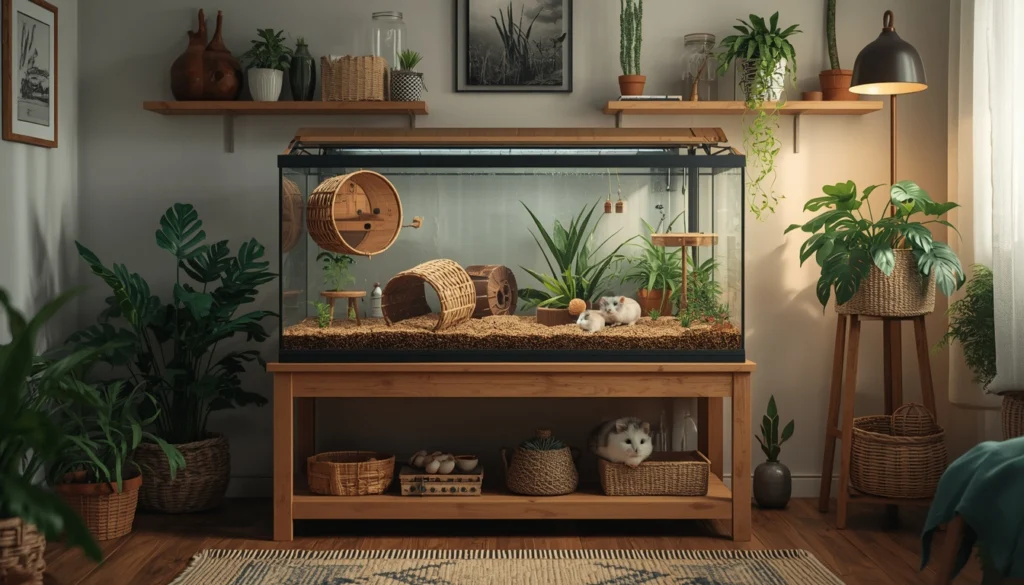
How to Set Up a Syrian Hamster Cage
1. Deep Bedding
Syrian hamsters love to burrow. Add at least 6–10 inches of paper-based bedding in part or all of the enclosure. Avoid cedar and pine shavings, which can irritate the respiratory system.
2. The Right Wheel
A Syrian hamster needs a wheel of about 11–12 inches or larger, with a solid running surface. If your hamster’s back arches while running, the wheel is too small.
3. Hideouts
Provide at least one multi-chamber hide, plus extra hideouts around the enclosure. Hamsters like dark, enclosed spaces for sleeping and storing food.
4. Sand Bath
A shallow dish of chinchilla sand, not dust, or clean play sand lets your hamster groom and dig.
5. Chews and Enrichment
- Wooden chews and apple sticks (safe types only)
- Cork logs and tunnels
- Cardboard boxes and paper tubes
- Scatter-feeding food to encourage foraging
6. Food and Water
Use a heavy ceramic food dish or scatter food in the bedding. Provide water in a bowl, a bottle, or both, and check it daily.
7. Safe Platforms
Keep platforms low. Falls from high levels can injure hamsters. As a rule of thumb, avoid drops of more than about 6 inches unless there’s deep bedding underneath.
Where to Place Your Hamster Cage
- In a quiet room away from loud TVs and speakers
- Away from direct sunlight, heaters, drafts, and air conditioners
- At a comfortable temperature of about 65–75°F
- Out of reach of cats and dogs
Cleaning Your Syrian Hamster Cage
- Spot clean soiled bedding and the pee corner every few days.
- Replace some bedding regularly rather than doing full clean-outs, which remove familiar scents and can stress your hamster.
- Wash food dishes and water bottles weekly.
Can Two Syrian Hamsters Share a Cage?
No. Syrian hamsters are solitary as adults and will fight, sometimes causing serious injuries. Always house Syrian hamsters alone.
Related Hamster Guides
New to hamsters? Read our hamster cage tips for beginners and learn how long hamsters live. Have a smaller species? See how long dwarf hamsters live. General small-pet welfare advice is available from the RSPCA, and health information from VCA Animal Hospitals.
Syrian Hamster Cage Shopping Checklist
- An enclosure with 775+ square inches of continuous floor space
- A deep base or bedding guard for 6–10 inches of bedding
- Paper-based bedding (unscented)
- An 11–12 inch or larger solid-surface wheel
- A multi-chamber hideout, plus 2–3 extra hides
- Chinchilla sand and a shallow sand dish
- A ceramic food dish and water bowl or bottle
- Safe chews, cork logs, and cardboard tunnels
- A quality hamster pellet or lab block, plus seed mix
Setting up the enclosure fully before your hamster arrives helps it settle in with less stress.
In Short
The best Syrian hamster cage offers at least 775 square inches of continuous floor space, deep bedding for burrowing, a wheel of 11–12 inches or larger, and plenty of hideouts and enrichment. Large glass tanks, DIY bin cages, and spacious modular enclosures are all good options. A bigger, well-planned home reduces stress and helps your Syrian hamster live a happier, healthier life.
Frequently Asked Questions
What size cage does a Syrian hamster need?
A common modern recommendation is at least 775 square inches (about 40 × 20 inches) of continuous floor space, and bigger is better.
Is a 40-gallon tank big enough for a Syrian hamster?
A 40-gallon breeder tank (36 × 18 inches) is about 648 square inches, below many current recommendations. A 75-gallon tank or larger is better.
What wheel size does a Syrian hamster need?
About 11–12 inches or larger, with a solid running surface.
Why does my hamster chew the cage bars?
Bar chewing is often a sign of stress or boredom, commonly from a cage that’s too small.
How deep should hamster bedding be?
At least 6 inches, and ideally 8–10 inches in at least part of the enclosure.
Can I use a wire cage for a Syrian hamster?
Yes, if it’s large enough, has a deep base, and has bar spacing no wider than about half an inch.



Comments