
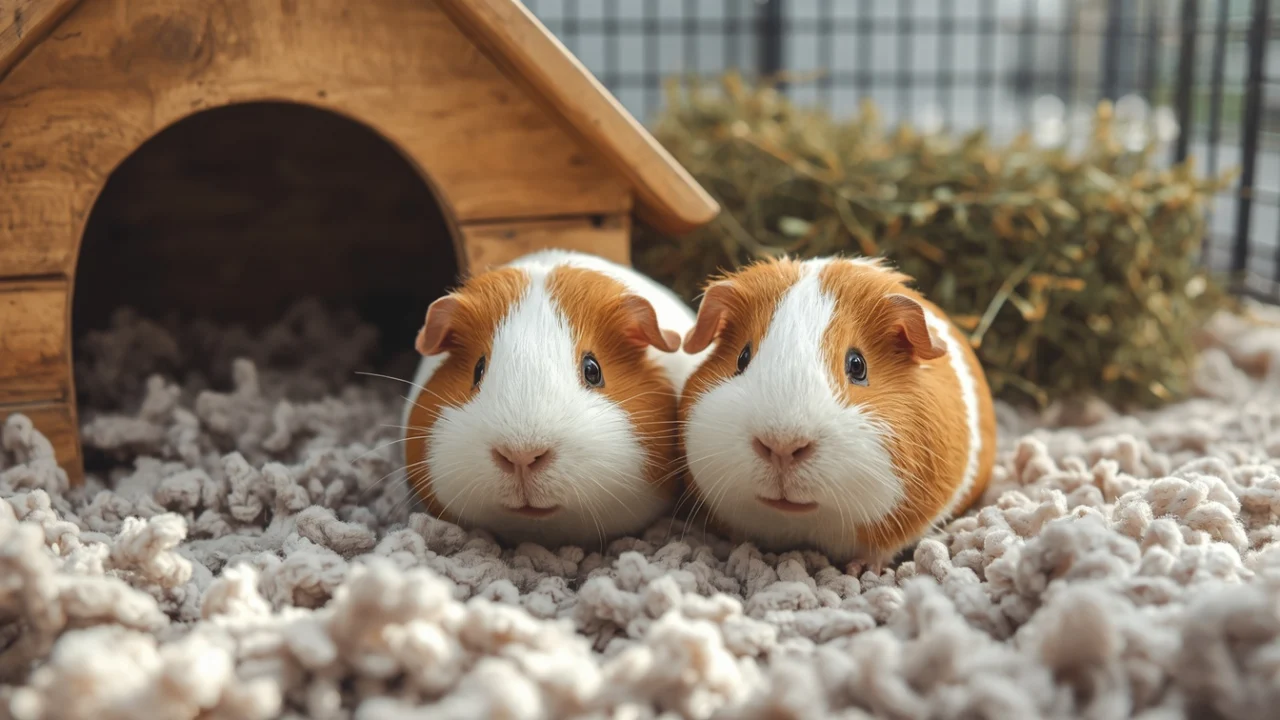
Best Bedding for Guinea Pigs:
Guinea pigs spend almost their entire lives on their bedding. They walk, sleep, eat, and potty on it. That’s why choosing the best bedding for guinea pigs is so important for their comfort, health, and your home’s smell. Good bedding keeps your guinea pigs dry, clean, and cozy, while the wrong bedding can cause respiratory problems, foot sores, or bad odors.
Here are six safe bedding options compared, plus what to avoid.
What Makes Good Guinea Pig Bedding?
The best bedding is:
- Absorbent, to keep urine away from delicate feet
- Dust-free or low-dust, to protect sensitive lungs
- Soft, to prevent sore feet (pododermatitis)
- Good at odor control
- Safe if nibbled
- Affordable and practical for your routine
6 Best Bedding Options for Guinea Pigs
1. Fleece Liners (Reusable)
Fleece liners are a very popular choice among guinea pig owners. They’re soft and washable, with an absorbent layer underneath that wicks away moisture.
Pros:
- Soft on feet
- Reusable, which saves money over time
- Dust-free
- Looks neat and tidy
Cons:
- Needs frequent spot cleaning and washing (every 2–4 days)
- Requires a good absorbent layer underneath
- Upfront cost is higher
Tip: Brush hay and droppings off daily, and wash liners without fabric softener, which reduces wicking.
2. Paper-Based Bedding
Paper bedding is soft, absorbent, and widely available in US pet stores.
Pros:
- Very absorbent
- Low dust (choose dust-extracted brands)
- Good odor control
- Soft and comfortable
Cons:
- Needs regular replacement, so ongoing cost
- Some brands are dustier than others
3. Aspen Shavings
Aspen is a hardwood shaving that’s considered safe for small animals.
Pros:
- Affordable
- Natural wood scent without harmful oils
- Decent absorbency
Cons:
- Can be less soft than paper or fleece
- Sharp pieces may occasionally poke
- Less absorbent than paper
4. Hemp Bedding
Hemp bedding is a newer option made from the hemp plant’s stalks.

Pros:
- Highly absorbent
- Low dust
- Good odor control
- Eco-friendly and compostable
Cons:
- Less widely available
- Can be pricier
5. Combination Setups
Many owners combine options, for example:
- Fleece liners for most of the cage
- Paper bedding in the hay and potty corner, where guinea pigs pee most
This setup reduces laundry and keeps the cage fresher.
6. Absorbent Pads Under Fleece
Absorbent pads or towels beneath fleece liners help soak up urine and keep the top layer dry. Make sure the layers are secure so guinea pigs can’t chew or burrow into them.
Bedding to Avoid
- Cedar shavings: contain aromatic oils that can irritate the respiratory system
- Untreated pine shavings: also contain aromatic compounds, and many owners avoid pine altogether
- Sawdust: very dusty, and can irritate eyes and lungs
- Corn cob bedding: can mold, and may cause blockages if eaten
- Scented bedding: fragrances can irritate sensitive noses
- Cat litter: clay and clumping litters are unsafe
- Newspaper alone: not very absorbent, and ink can transfer
- Cotton or fluffy “nesting” materials: can tangle legs or cause blockages
What About Hay as Bedding?
Guinea pigs need unlimited fresh hay for eating, but hay isn’t ideal as the main bedding. It doesn’t absorb urine well and can become moldy when wet. Keep hay in a hay rack or pile for eating, and use absorbent bedding underneath.
How Much Bedding Do Guinea Pigs Need?
For loose bedding like paper or aspen, aim for about 2–3 inches deep. That provides cushioning and absorbency.
How Often Should You Change Guinea Pig Bedding?
- Spot clean daily: remove wet spots and droppings.
- Full bedding change: about once a week for loose bedding, more often for multiple guinea pigs.
- Fleece liners: wash every 2–4 days, with daily sweeping.
Best Bedding for Guinea Pigs for Smell
For odor control:
- Paper and hemp bedding are excellent absorbers.
- Use a potty corner with extra bedding.
- Spot clean daily.
- Wash fleece often and keep absorbent layers fresh.
- Make sure the cage is large enough. Crowding increases odor.
Signs of Bedding Problems
Watch for:
- Sneezing or wheezing, which may point to dusty or irritating bedding
- Red, sore, or swollen feet, which may mean wet or rough bedding
- Strong ammonia smell, which means bedding needs changing more often
- Skin irritation
Contact an exotic or small-animal vet if symptoms continue. Care information is available from the RSPCA’s small pet pages and VCA Animal Hospitals.
Related Guinea Pig Care
A comfortable home and a healthy diet go together. See can guinea pigs eat bananas and can guinea pigs eat strawberries. If you also keep rabbits, read can rabbits eat celery.
Quick Bedding Comparison
- Fleece liners: very soft and dust-free, with good odor control if washed often. Higher upfront cost, low ongoing cost.
- Paper bedding: soft and very absorbent with excellent odor control. Moderate ongoing cost.
- Aspen shavings: fairly soft and absorbent, and affordable. Can be less soft on feet.
- Hemp bedding: very absorbent with great odor control. Moderate to high cost.
Setting Up a Guinea Pig Cage Floor
1. Choose a spacious cage. Guinea pigs need plenty of floor space, and larger is better.
2. Add an absorbent layer if using fleece.
3. Lay fleece or 2–3 inches of loose bedding.
4. Place a hay rack over a “potty corner” with extra bedding.
5. Add hideouts, one per guinea pig.
6. Place food and water away from the potty corner.
In Short
The best bedding for guinea pigs is soft, absorbent, and low-dust. Fleece liners, paper bedding, aspen shavings, and hemp are all safe choices, and a combination setup often works best. Avoid cedar, untreated pine, sawdust, scented bedding, and cat litter. Spot clean daily, change bedding regularly, and your guinea pigs will stay healthy, comfortable, and happy.
Frequently Asked Questions
What is the best bedding for guinea pigs?
Fleece liners and paper-based bedding are two of the most popular and safe options.
Is pine bedding safe for guinea pigs?
Many owners avoid pine because of aromatic oils. Kiln-dried pine is considered less risky, but aspen, paper, or fleece are safer choices.
Can guinea pigs use cat litter?
No. Clay and clumping cat litters are unsafe for guinea pigs.
How often should I clean my guinea pig’s bedding?
Spot clean daily and do a full change about once a week, or wash fleece every 2–4 days.
Is fleece bedding better than paper?
Both are good. Fleece is reusable and dust-free, while paper is very absorbent and easy to replace.
Can I use hay as bedding?
Hay is for eating, not the main bedding. It doesn’t absorb urine well and can mold.




1 pet parent chimed in